- From the house
- approx. 17 km · 20 minutes by car; without a car, by train with one change, about an hour
- Time needed
- the church alone with the recorded commentary about 40 minutes, with the whole of Plac Pokoju (Peace Square) 1–2 hours, with the Rynek (market square) and the cathedral half a day; admission is a contribution towards the restoration
- When to go
- ideally on a weekday morning; on Sundays and public holidays visiting only starts after the service, and on Good Friday, 1 November and Christmas Eve the church is closed to visitors
- Good for
- families (there is something to hunt for on the ceiling), Bach lovers, anyone on a rainy day; the church is wheelchair accessible
History: a church that was not allowed to look like one
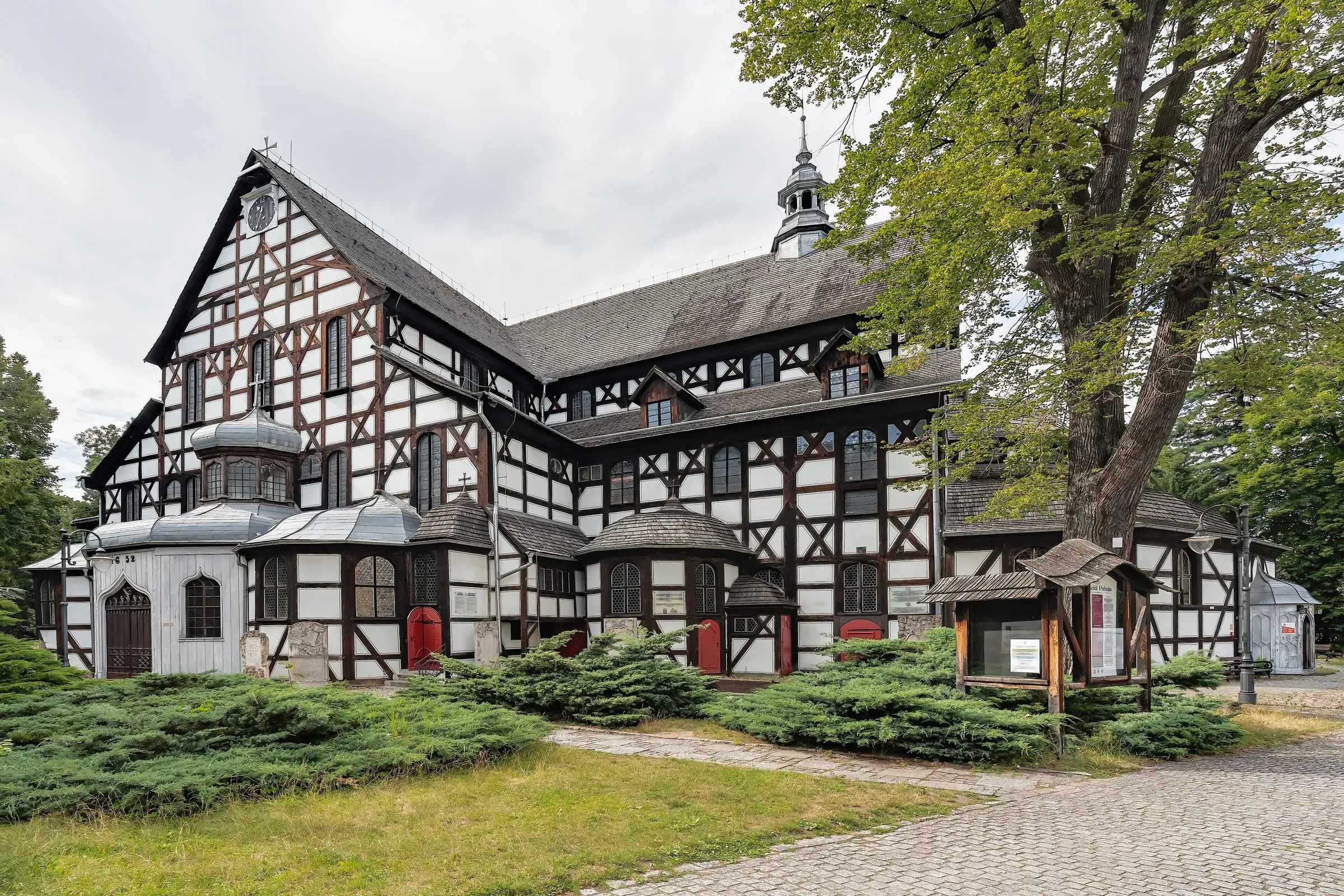
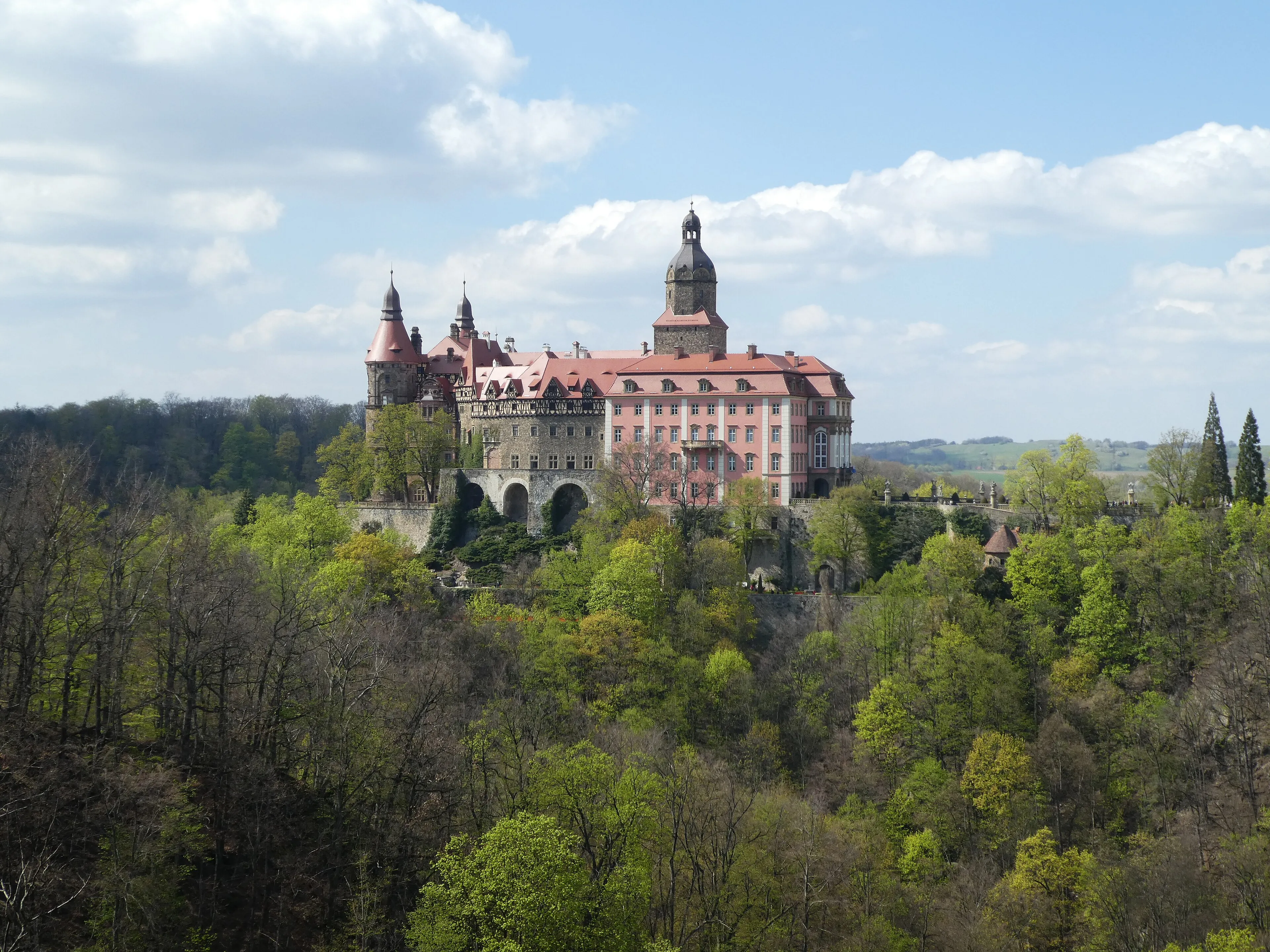
The Peace of Westphalia of 1648 ended the Thirty Years' War, and Emperor Ferdinand III, under pressure from Protestant Sweden, had to allow the Lutherans of Silesia three churches: in Głogów, Jawor and Świdnica. His conditions were harsh: outside the town walls, no tower and no bells, built only of wood, sand, straw and clay, finished within a year — and in such a way that the building did not look like a church. In 1652 the people of Świdnica were given a plot outside the walls, two hundred paces by two hundred, and to begin with they worshipped in a makeshift ‘God's Hut’ (Boża Chatka). Christian Czepko set off to raise money at the Protestant courts of Europe; according to his memoir he covered some 4,000 kilometres on foot, on horseback and by ship. Most of the timber came from the forests of Count Johann Heinrich von Hochberg of Książ — in gratitude his family was given a private box in the church that still outshines all the others. These are the same Hochbergs whose castle is a 20-minute walk through the woods from us. The church in Głogów has not survived; those in Świdnica and Jawor still stand, even though, as UNESCO's justification for the listing points out, there was widespread doubt that they would last. Since 2017 the Świdnica church has also been a Polish Monument of History (Pomnik Historii).
Inside: an hourglass for the sermon and angels on the organ
What strikes you first are the galleries: they rise over several levels, and their parapets carry 78 quotations from the Bible and 47 allegorical scenes, along with the coats of arms of the nobility, portraits of burghers and the guild shields of the bakers, brewers, butchers and clothmakers. Around 1696 the ceiling was covered with paintings of the Holy Trinity, the Last Judgement and the Heavenly Jerusalem. The body of the pulpit, made in 1729, is held up by Faith with a cross, Hope with an anchor and Charity with a child, and on the lectern stands an hourglass divided into four half-hours that timed the sermon — work out for yourself how long one could last. The organ was built in 1909 by the Świdnica firm of Schlag & Söhne: 62 stops and nearly four thousand pipes, the largest instrument in the region, thoroughly restored in 2016. Its baroque case is carried by two Atlas figures and decorated with moving figures of music-making angels and a portrait of Luther, behind which restorers found a conductor's baton. All that is left of the first, 17th-century organ is a few pipes — and its likeness on the ceiling. The parish encourages visitors to spot that painted organ among the other pictures: a perfect job for children before they start to get bored.
Legends and lore
Church of Peace built without nails? Where the legend comes from
Local lore has it that the Church of Peace was built without a single nail, because the Emperor had banned even those. The story has done the rounds for years and even found its way into “National Geographic Traveler”. According to the Polish daily “Super Express”, it is attributed to a woman who once looked after the church and was not necessarily well versed in its history. The Emperor's conditions, as the parish describes them, mention wood, sand, straw and clay — not a word about nails. Today the structure holds thousands of nails; whether they were there from the start, the paper admits, nobody knows for sure. What is certain is that the church few believed would last has stood since 1657.
Behind the wall: lime trees, a carillon and coffee in a poet's house
The church stands in the middle of a square enclosed by a wall a kilometre long. From the main gate on ul. Kościelna a cobbled path leads up to it in the shade of old lime trees. Thirteen of the trees on the square are protected natural monuments; in spring the magnolias and rhododendrons are in flower, and in July the air smells of lime blossom and lavender. The bell tower was not allowed to be built until 1708; several times a day its carillon plays Lutheran hymn tunes. The smallest building, the former watchman's house, is now the 7 Niebo café (‘Seventh Heaven’), serving Lower Silesian gingerbread, cheeses and sourdough bread, with a garden by the fountain in summer and an open fire in winter. Pastor Benjamin Schmolck once lived here; he wrote more than a thousand hymns, some of which Lutherans still sing today. Carl Gotthard Langhans, who went on to design the Brandenburg Gate, was educated at the former Lutheran grammar school, which dates from 1708. Among those buried in the old cemetery is the Schlag family of organ builders; the last funeral here took place in 1957. Ask for the audio guide at the entrance: it has 65 stops, some of them out on the square, and you hand the device back before you leave the square.
The Bach Festival, Kohl and the Dalai Lama
On 31 December 1729 Christoph Gottlob Wecker, a pupil of Johann Sebastian Bach, became cantor of the church. Bach gave him a letter of recommendation, and in a private letter admitted that he would gladly have helped him out with Passion music, only he did not yet have any himself. To commemorate this link, Świdnica has held a Bach Festival every summer since 2000, 250 years after Bach's death — usually in July and early August, with the Church of Peace as its main venue. The wooden interior has a short reverberation, so, as the festival's founder Jan Tomasz Adamus writes, Bach's intricate scores sound clearer here than in large masonry churches. Outside the festival, the parish takes bookings for an organ recital by its own organist. Born of a religious war, the church has also become a place of reconciliation: in 1989 the Polish Prime Minister Tadeusz Mazowiecki and the West German Chancellor Helmut Kohl prayed here on their way to Krzyżowa (Kreisau) near Świdnica, once the estate of the von Moltke family and today a place of remembrance for the anti-Nazi Kreisau Circle. In 2016 representatives of Christians, Jews, Muslims and Buddhists signed an Appeal for Peace here together with the Dalai Lama. The congregation, which after 1945 shrank from well over ten thousand members to around a hundred, still gathers here for worship every Sunday.
Getting there from us, the Rynek and the rest of the day
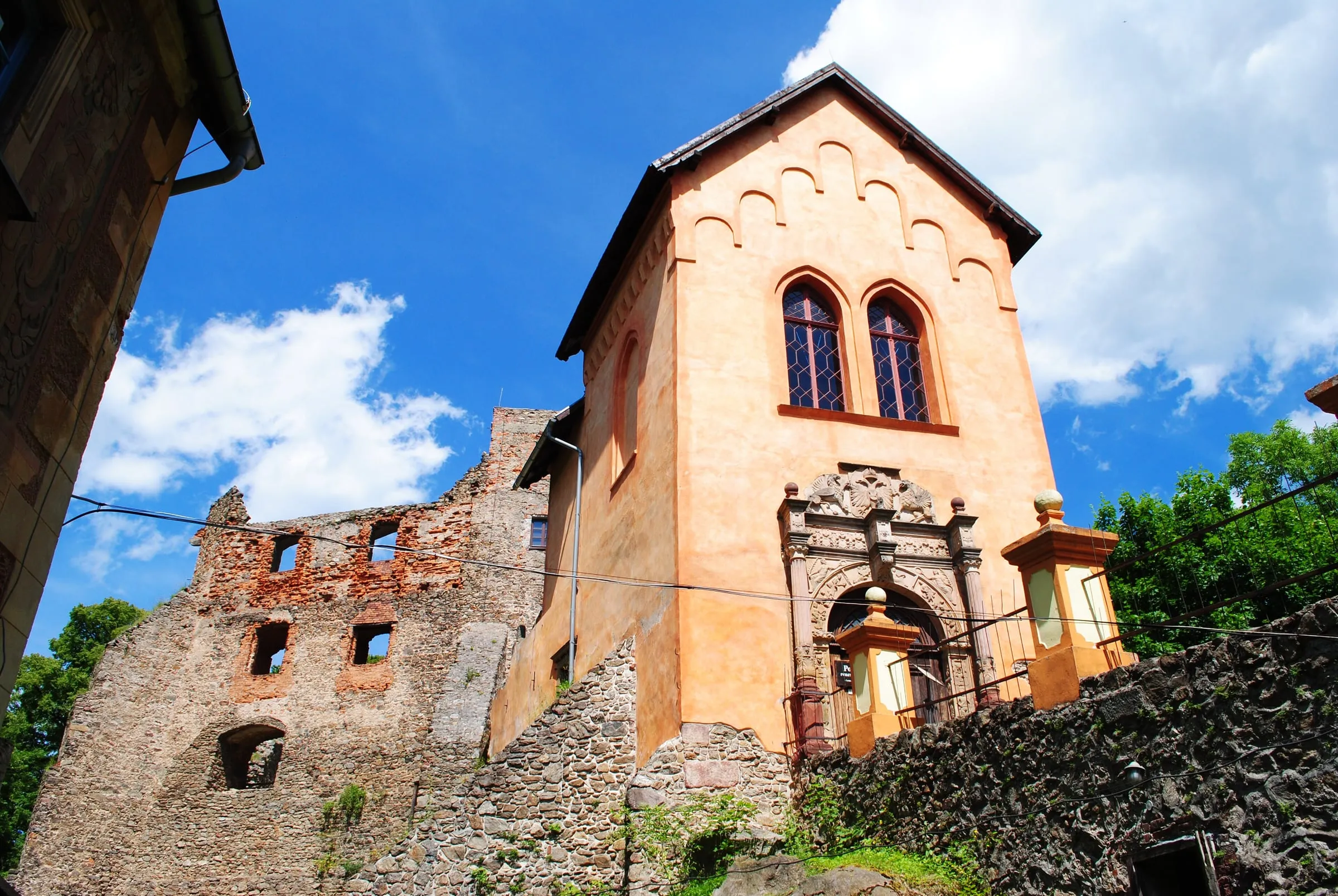
By car it is about 17 kilometres and 20 minutes. You can leave the car on ul. Kościelna, by the main gate to the square, or at pl. św. Małgorzaty; check on the spot whether there is a charge, and how much. Without a car, go by train — for example from Wałbrzych Szczawienko station, changing at Jaworzyna Śląska, as there is no direct train from Wałbrzych — about an hour in all. Check the timetable with Koleje Dolnośląskie (Lower Silesian Railways); from Świdnica Miasto station it is a quarter of an hour's walk to the church. The Rynek (market square) is a few minutes on foot from the gate. The town hall tower collapsed in 1967 and was not rebuilt until 2012; the town hall itself houses the Muzeum Dawnego Kupiectwa (Museum of Old Trade). Nearby stands the Cathedral of St Stanislaus and St Wenceslaus, whose tower, at over a hundred metres, is the tallest church tower in Silesia. The best fit for the afternoon is Grodno Castle, about 25 minutes' drive from Świdnica; you come back to us via Jedlina-Zdrój. In the rain Świdnica is enough on its own: the church, the cathedral and the museum are all under cover. Save Książ Castle for another day — you can walk there from us.
Visiting hours are seasonal and the admission contribution can change, so we don't give them here. The parish lists hours, the contribution and closed days on its Zwiedzanie page (‘Visiting’), and service times under Nabożeństwa (‘Services’). Dates for the Bach Festival are on its site.