- Distance
- just over a kilometre; Lubiechów, ul. Wrocławska 158
- Getting there from us
- 15 minutes on foot via Witosa, Zdrojowa and a short stretch of busy Wrocławska
- To the castle, and by bus
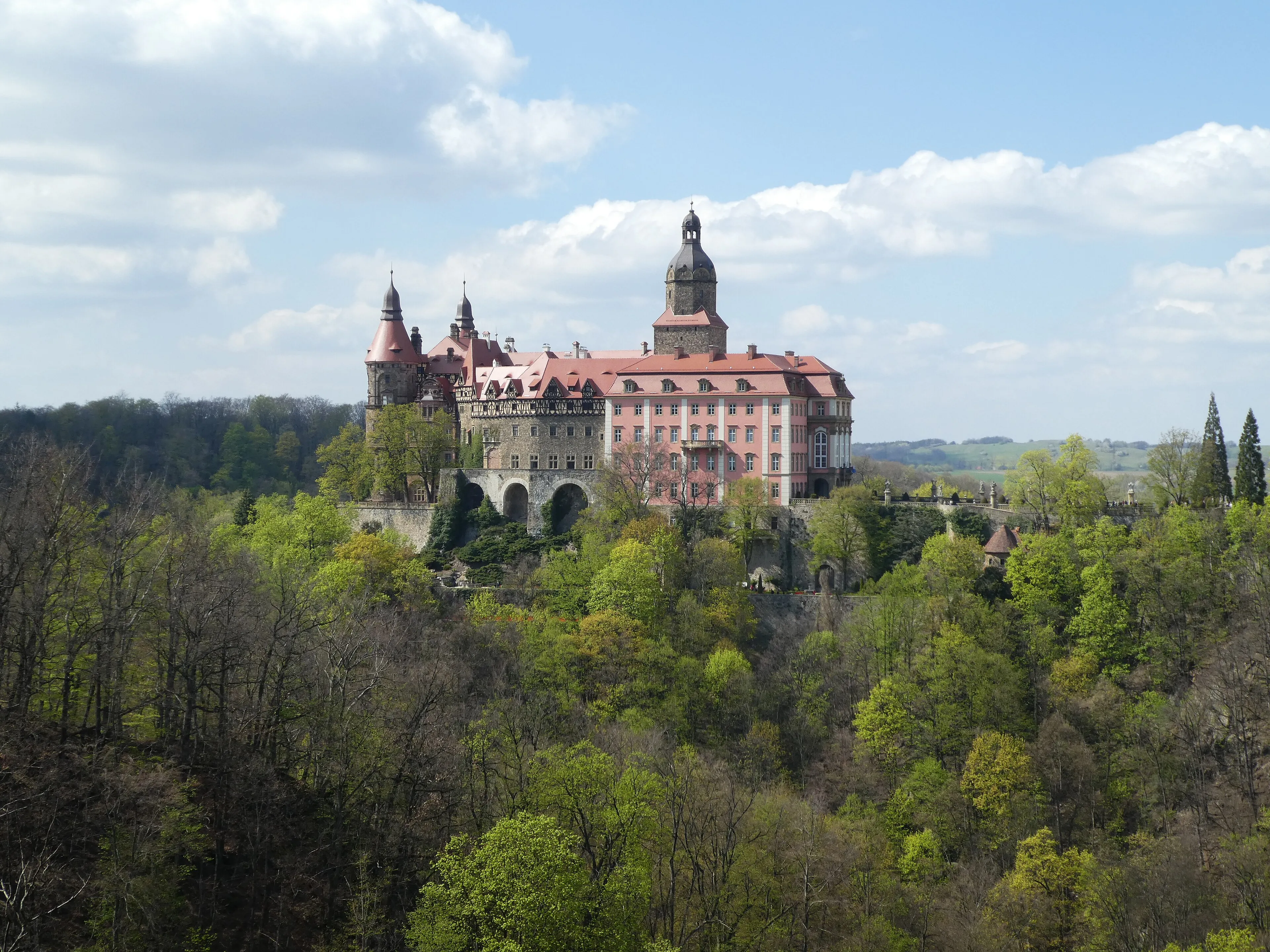
- to the castle on the white-and-red trail, 2 km, about 25 minutes uphill; buses 8, 9 and 12 stop almost opposite at “Wrocławska – Szczawienko”, one stop beyond ours
- Time inside
- 45 minutes to an hour; a one-way route of about 500 m
- Ticket
- separate, or combined with the castle; in recent seasons the castle ticket has also covered the palm house — keep yours, and check the rules before you set off
- Best for
- rainy days, winter, children; no dogs (assistance dogs excepted)
Walls from Etna and a thousand stone flowerpots
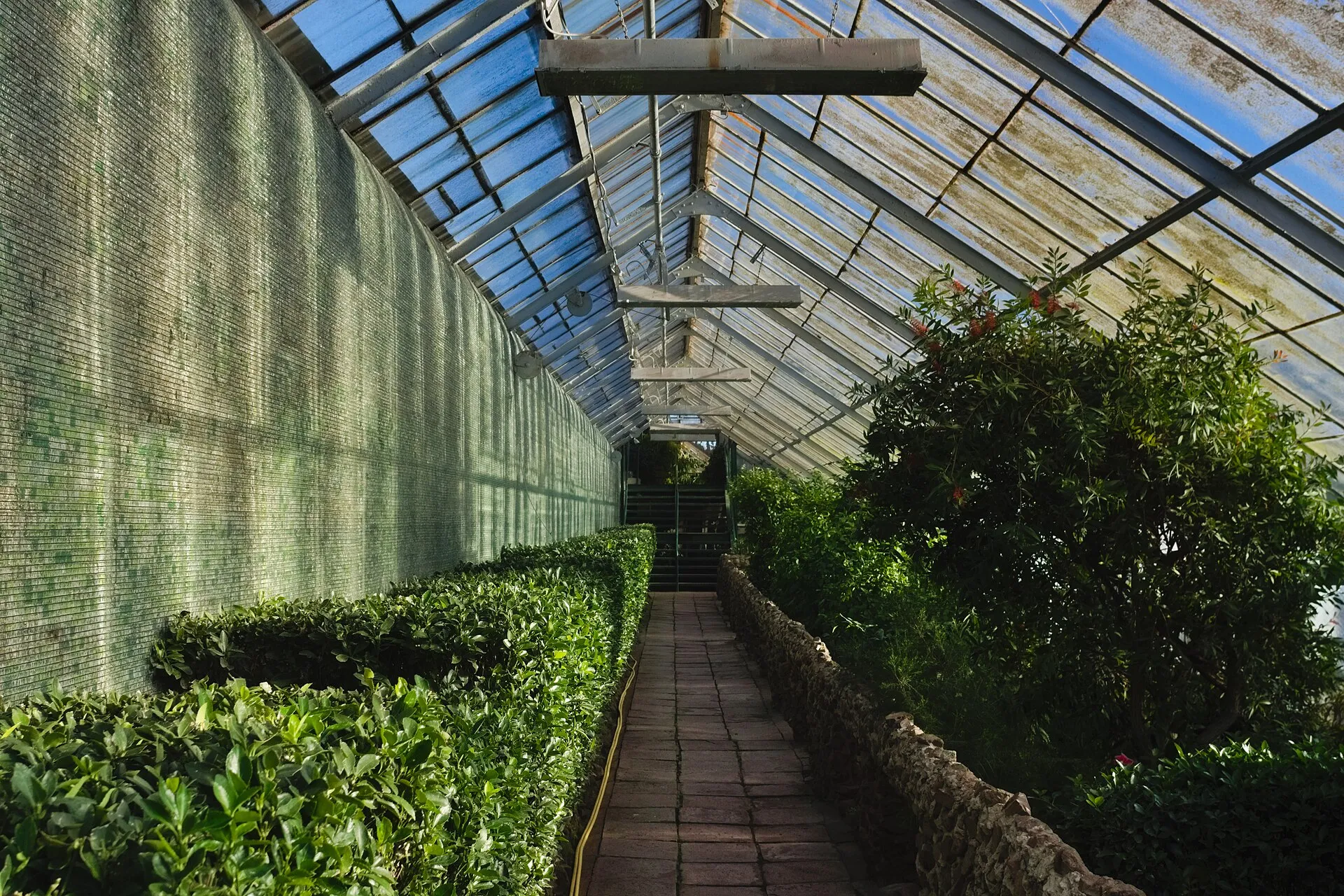
The walls are the most remarkable thing here. The prince had seven railway wagons of hardened Etna lava brought from Sicily (in some tellings the number has since swollen to nearly sixty). The tuff was broken up and built into grottoes, waterfalls and walls full of pockets for plants, so the greenery grows straight out of the rock rather than out of labelled beds. For years the walls were smothered in ficus; when it was cleared away, more than a thousand of these pockets came to light. In the Hochbergs' day they were planted with species standing for the four seasons, and today the “tuff flowerpots” can be seen beside the paths again. The heart of the palm house is a metal-and-glass hall fifteen metres high, planted with date palms and ringed by single-storey glasshouses; together they cover about 1,900 m². The hall dates from before the First World War, though it has not come through untouched: the heating and glazing were replaced in 1963, and part of the structure later on.
What to look for: a palm older than the building and a 200-year-old bonsai
More than 250 species grow here, arranged by climate zone: bamboo and ficus from Asia, eucalyptus from Australia, cacti and agaves from Central America, citrus from the Mediterranean; the collection started with around eighty. In a 2018 newsletter the management picked out a few plants worth finding: a Canary Island date palm, then reckoned to be about 170 years old — older, in other words, than the building itself; an araucaria more than a century old that has grown to ten metres here; agaves, which flower once in their lives, in Europe usually after about thirty years, and then die (when the first one bloomed here in 1978, its flower stalk grew as much as 20 cm a day and reached eight metres); and a yucca that flowers in October with a cluster of cream blossoms almost a metre long. A separate section holds a permanent bonsai display, according to the management the only one of its kind in Poland; the oldest tree is a 200-year-old juniper, and the little trees change with the seasons outside — in autumn they turn colour just like the forest.
A gift for Daisy, and the nursery that supplied the castle
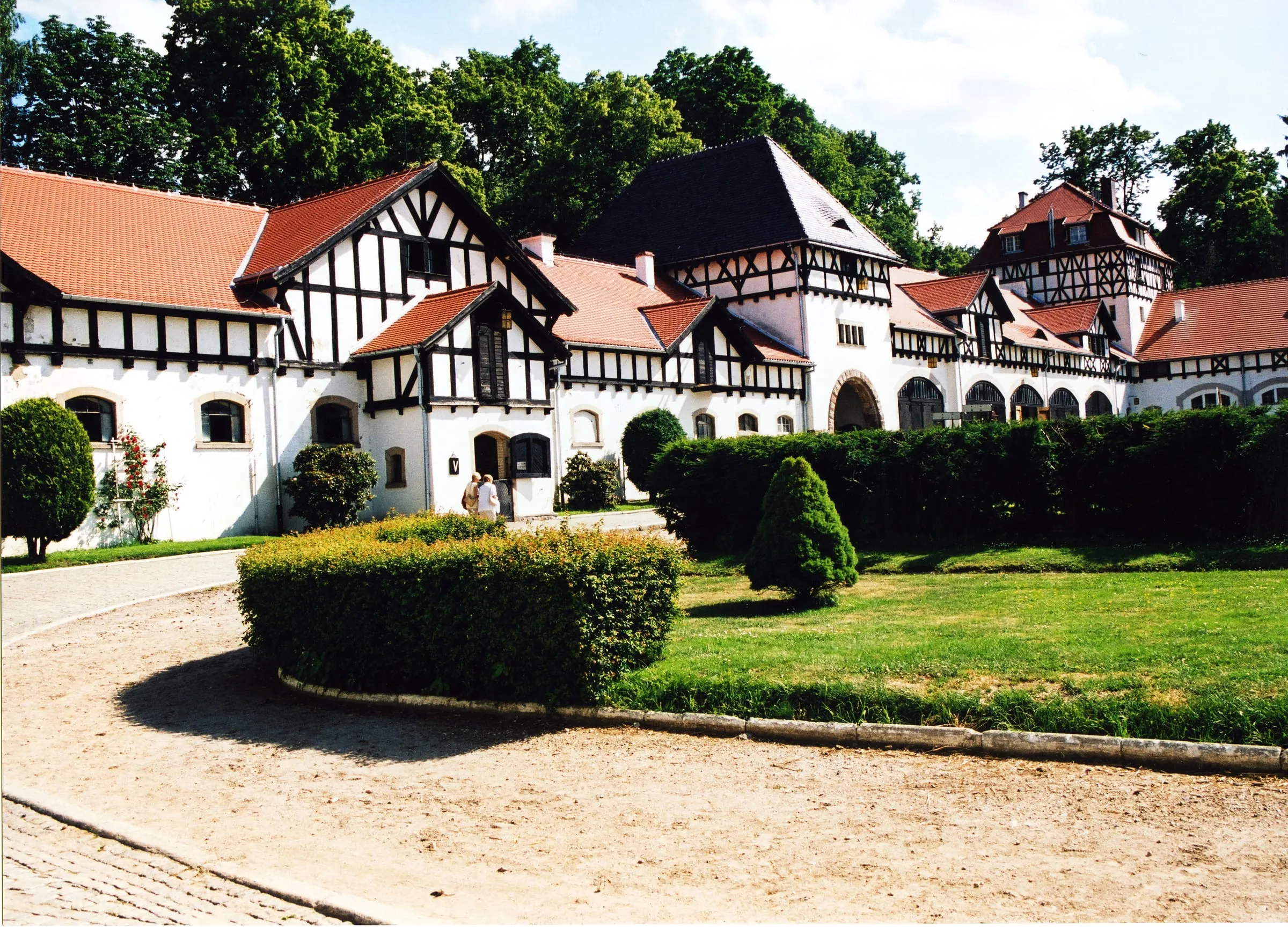
Hans Heinrich XV von Hochberg built the palm house with his wife in mind: the British-born Mary Theresa Cornwallis-West, known as Daisy. The castle administration dates the building to 1908–1911, the heritage register to 1911–1913; it cost seven million gold marks. Hothouses, Japanese-style gardens, a rose garden, an orchard and a kitchen garden were laid out around the hall in Liebichau, today's Lubiechów; historians of the Książ gardens describe it as the largest show nursery in the east of Germany at the time. From here fruit and vegetables went to the princely kitchen, and young plants to the park, which Daisy and her British gardeners were turning into a landscape garden full of rhododendrons. The rose garden held the creamy-white rose “Fürstin von Pless”, bred in Daisy's honour by Peter Lambert in 1911 — it no longer grows here, but according to the management you will find it on the castle's Rose Terrace. After 1940 the palm house fell into decline; the city bought it in 2012, and since 2025 it has been a Monument of History (Pomnik Historii), together with the castle, the park and the stud. To see what it looked like in Daisy's time, look for the photographs taken by the prince's chef, Louis Hardouin, in the exhibition “Książ od kuchni” (“Książ from the kitchen”) at the castle.
A palm house for Daisy of Pless, promised on her wedding day?
Local lore says the palm house began with a wedding. On 8 December 1891 Daisy and Hans Heinrich XV were married at St Margaret's, Westminster; the church was decked with palms and white flowers, and the bride's bouquet was made of orange blossom. Even then, the story goes, the young husband resolved to give his wife a winter garden near the family seat at Książ, in Liebichau. That is how the castle administration itself told it in its newsletter — with a cautious “probably”. The facts behind it are less of a fairy tale: the palm house was built for Daisy only some twenty years after the wedding, and in 1922 the couple divorced. The glasshouse has outlived the marriage by more than a century.
Before you set off: coat, dog and ticket
Inside it is warm and humid: in winter your glasses steam up the moment you step through the door and the coat comes off within minutes, so leave the heavy layers in your room. You go round at your own pace, with no guide and no group to wait for — which is handy with children: it is all under cover, with no going underground; children up to 12 may only go in with an adult. Dogs are not allowed in (assistance dogs excepted), so if you have brought yours to stay with us, take turns going in. The route has some architectural barriers — if you use a wheelchair or crutches, ring ahead. In recent seasons a castle ticket has also included one visit to the palm house within 12 months of purchase (Night Tour tickets did not count) — keep yours and check whether the rule still applies. In winter, come in the evening: in recent seasons, from November to February, the palm house and its garden were lit up for the Gardens of Light (Ogrody Światła), which needed a separate ticket; their page will tell you whether they are back this winter — from us it is a quarter of an hour's stroll, with no parking to hunt for.