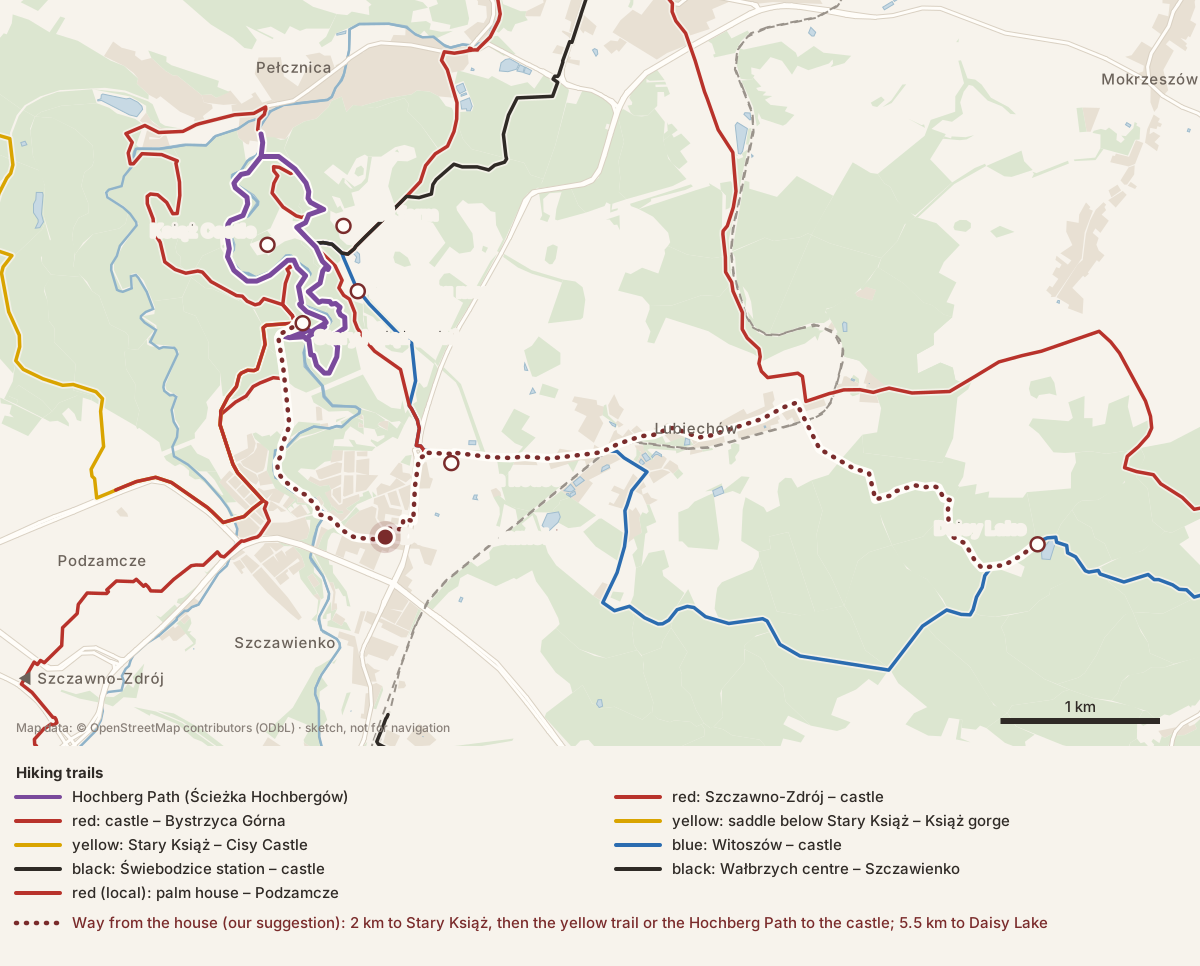
- From the house
- 5.5 km on foot via the palm house and Lubiechów, about 1.5 hours, a little over 100 m of climbing
- Trail
- green from the palm house (Piast Castles Trail); back on the blue over Witosz, or by bus from Lubiechów
- Time to allow
- half a day or a whole one: about 11 km there and back, 3 hours of walking plus a break
- At the lake
- no toilet, shop or shelter by the water; there is a shelter with tables on top of Witosz
- Good for
- a quiet day in the woods, photographers, school-age children; not for swimming, not with a pushchair, and best without the dog
The trail from Daisy's palm house to Daisy Lake
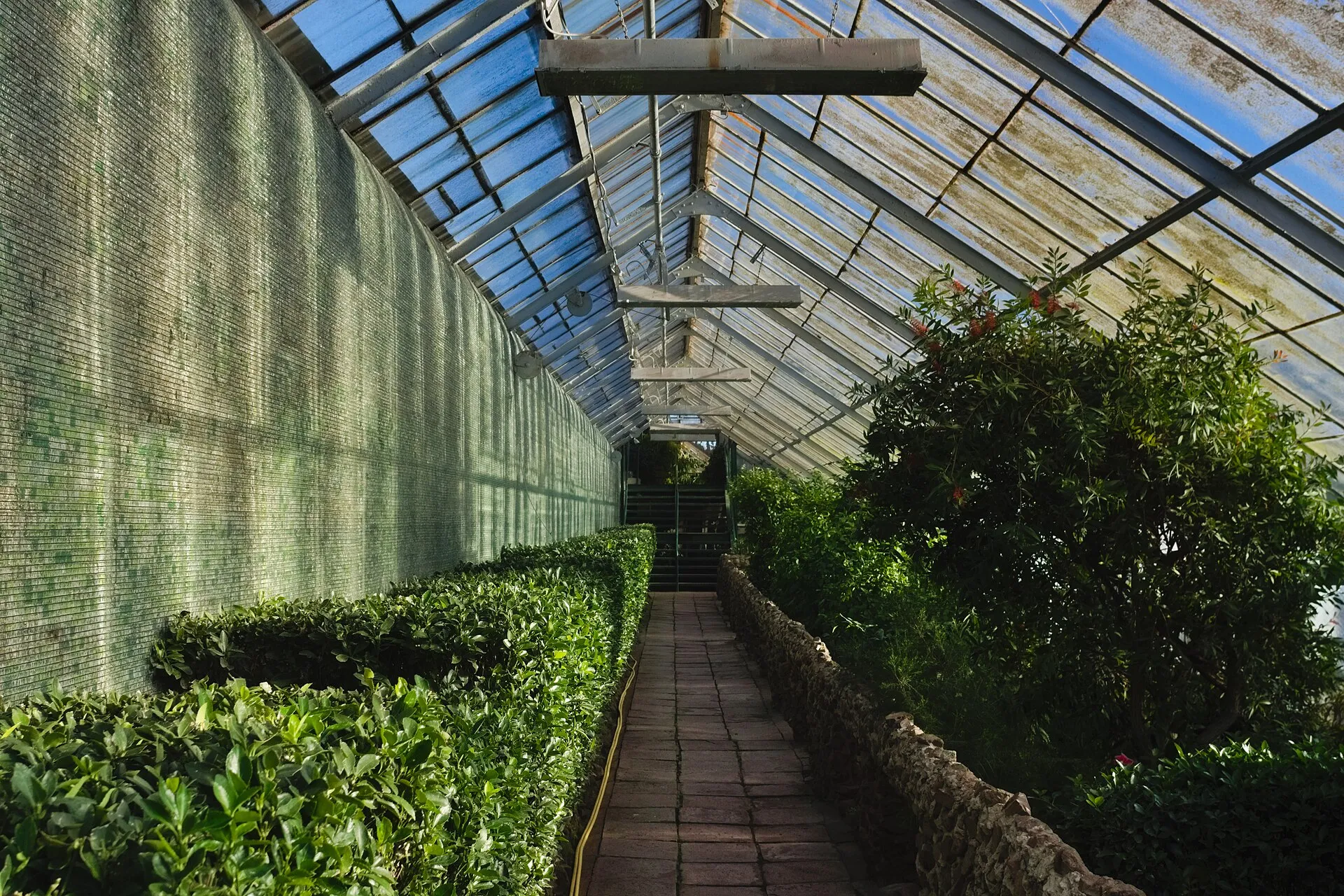
A quarter of an hour along ul. Witosa brings you to the palm house in Lubiechów, which Hans Heinrich XV built for Daisy — so the walk starts at a present for the princess and ends at the lake that bears her name. By the palm house there is a board with a map of the park, and this is where you join the green Piast Castles Trail (Szlak Zamków Piastowskich): 800 metres on the blue-and-green to ul. Lisia, 1.3 km on the green to ul. Wilcza, half a kilometre to the edge of the forest, then 1.5 km uphill through the woods to the Pod Witoszem pass (443 m) and half a kilometre down to the reserve gate and the lake (about 400 m above sea level) — some 5.5 km from the house in all. At a steady pace an hour and a half is enough; the signpost put up by PTTK, the Polish hiking society, gives 1 h 45 min from the lake to the palm house, so with children or a camera allow closer to two hours from the house. If you run out of steam for the walk back: the green trail passes the bus terminus on ul. Wilcza in Lubiechów, 55 minutes from the lake, and from there the number 8 takes you to our stop, Wrocławska – Fabiana; check current departures in the timetable. The same trail carries on through Pogorzała and Złoty Las all the way to Grodno Castle (3 h 30 min from the lake, according to the signpost), but getting back from there is up to you.
A 375-million-year-old reef in a green bowl
The lake fills an old quarry. The quarrymen worked a lens of Upper Devonian reef limestone: the sediment of a shallow, warm sea in which corals grew. The pit has been partly flooded since 1870. The lake covers 0.66 hectares, is almost oval and up to 23 metres deep; in 1954 its green water earned it the official name Jezioro Zielone (Green Lake), but on signposts and among locals it has stayed Jeziorko Daisy. The rock and the layers of marl have yielded corals, brachiopods, crinoids, ostracods, snails and cephalopods; as early as 1873 Władysław Dybowski described two coral species from here. The reserve, set up in 1998, protects 7.11 hectares: the fossils exposed in the quarry together with the rich Sudeten beech wood around it. It is at its loveliest in early spring, before the beeches come into leaf, when snowdrops, wood anemones and mezereon are in flower, followed later by lily of the valley. The water level depends on the weather — after a dry summer it drops and leaves a muddy shore, and after a few wet weeks the lake is full again.
Princess Daisy's tower and the fossil named after her
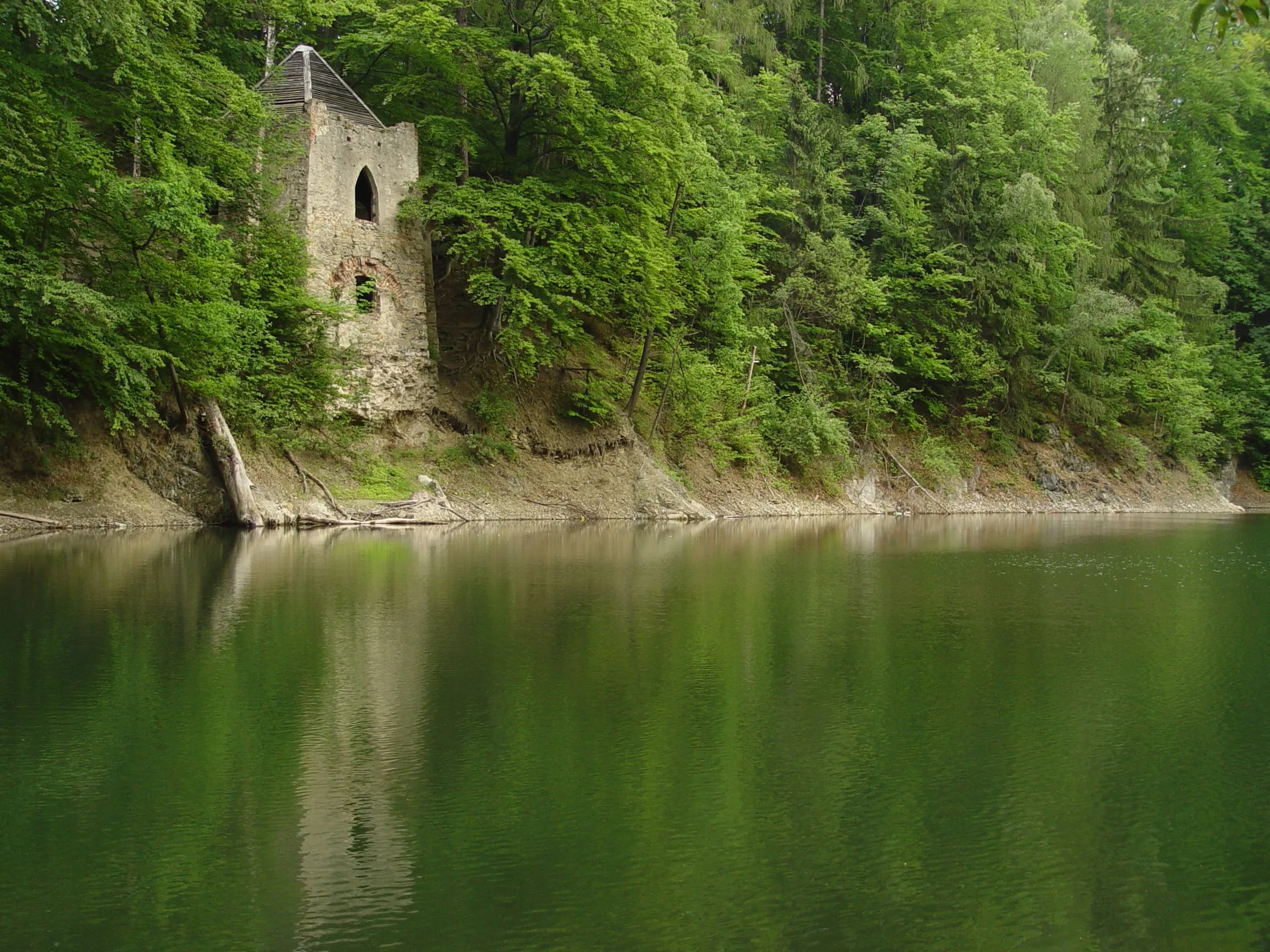
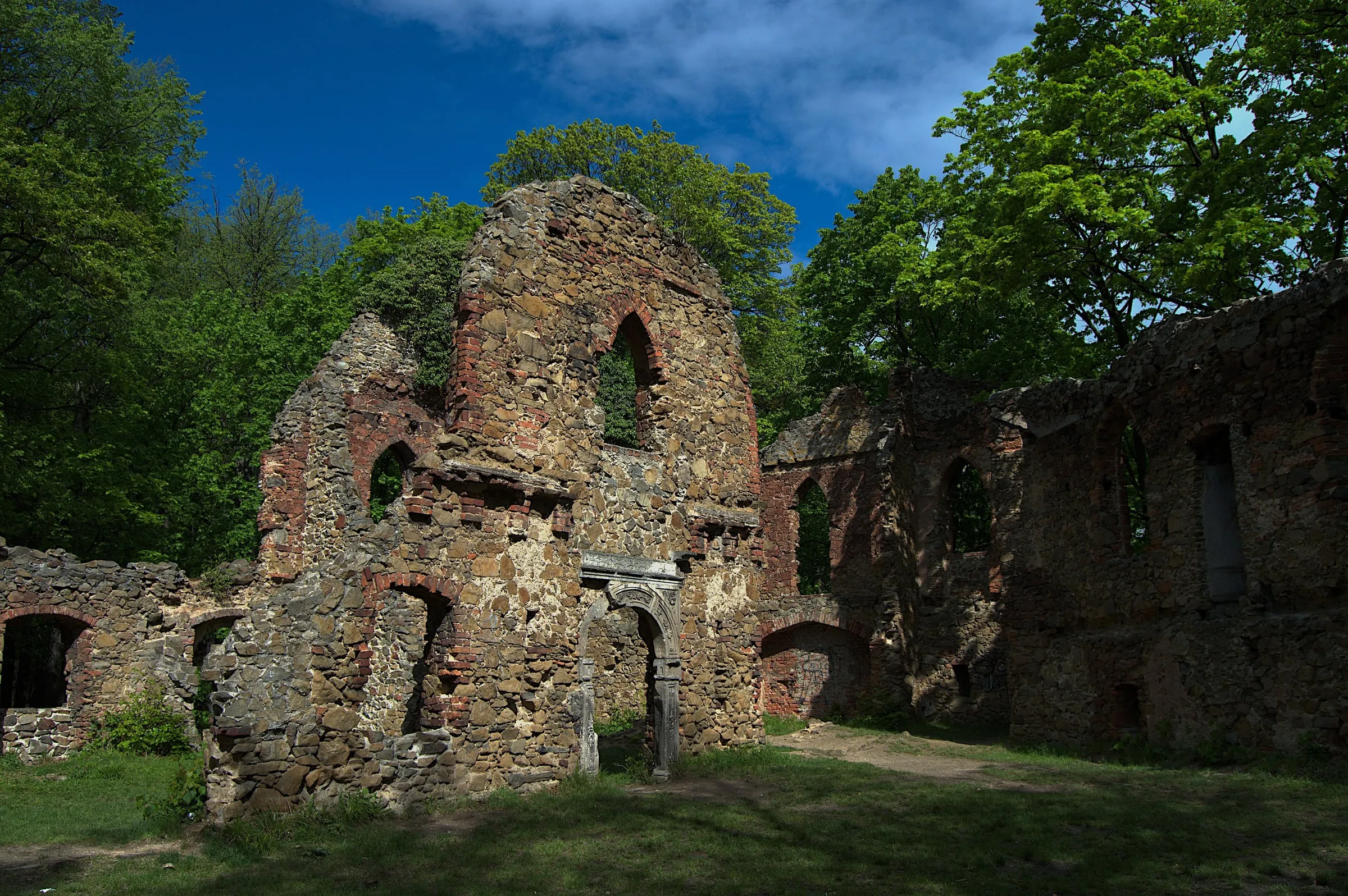
The name comes from Daisy, Princess of Pless (1873–1943), a Briton born in Wales and the most famous lady of Książ, who was particularly fond of this spot; pre-war maps show it as “Daisy-See”. On her instructions one of the old lime kilns was rebuilt as a tower with a hunters' room. Today it is a rubble-stone ruin with a pointed-arch window and a peaked wooden roof. A second old lime kiln stands beside it, and not far away are the ruined walls of a small hunting lodge. Yet the most intriguing trace of Daisy is in the rock itself. In 2013 the palaeontologist Adam T. Halamski of the Polish Academy of Sciences described a new species of brachiopod from this quarry and named it Spinatrypa mariaetheresiae — after her real first names, Mary Theresa. So the princess, whose grave nobody can point to today, has a memorial 375 million years old.
Before you set off: rules, dogs and a packed lunch
This is a nature reserve, so bathing, swimming and diving are forbidden, as are collecting stones and fossils, lighting fires, smoking, camping, making noise and leaving the trail. The fossils stay in the rock for everyone to see, not in your rucksack. Dogs: Poland's Nature Conservation Act in principle bans them from reserves (the exceptions are assistance dogs and places designated in a reserve's conservation plan); we have found no separate exception for Daisy Lake, so check the boards at the gate and expect a ban. The quarry walls are steep and only fenced in places, and the tower has been neither restored nor made safe: do not go inside, and keep children close. The shore can be slippery and boggy. There is no toilet, shop or shelter at the lake, so bring water and something to eat. After rain and in winter the paths are slippery, and a pushchair will not get through: these are forest tracks with a climb over a pass. In a drought or after a storm the forest is sometimes closed temporarily — the State Forests (Lasy Państwowe) publish current forest closures (in Polish).